
Yesterday, the kitchen looked perfectly normal.
This morning, there’s a trail of ants stretching from a tiny opening near the window toward the countertop.
Where did they come from so quickly?
The answer is that they probably didn’t suddenly appear. Ant colonies can exist outdoors, beneath landscaping, around foundations, inside wall voids, or in other protected areas. What homeowners notice is often the moment workers begin traveling through a visible part of the house while searching for resources.
Food is an obvious attraction, but ants may also be looking for water or suitable shelter.
Understanding what is drawing them inside can make ant management more effective than simply wiping away the insects you can see.
South Pest Control provides residential and commercial pest services for ants, cockroaches, termites, mosquitoes, rodents, bed bugs, spiders, and other common Florida pests. Visit our Services page to explore pest-control options for your home or business.
Why Are Ants So Common Around Florida Homes?
Florida provides conditions that can support insect activity for much of the year.
Warm temperatures, moisture, landscaping, vegetation, food sources, and protected nesting locations can all contribute.
Homes also provide plenty of potential resources.
Kitchens contain food and water. Bathrooms provide moisture. Wall voids and structural gaps can offer protected spaces. Exterior landscaping can create pathways close to foundations.
That doesn’t mean every Florida home will have a serious ant infestation, but it does mean homeowners should pay attention to the conditions that make a property attractive.
The Ants You See May Be Only Workers
The ants moving across your counter usually aren’t the entire problem.
Ants are social insects that live in colonies. Worker ants leave nesting areas to forage for food and other resources.
When workers discover something useful, they can establish trails that other ants follow.
That’s why a few ants can eventually become a noticeable line.
Wiping away visible workers may temporarily improve the appearance of the kitchen, but if the colony and attractive conditions remain, activity can continue.
Effective management needs to consider more than the ants currently visible.
Food Doesn’t Need to Be Obvious
Ants don’t require an open bag of sugar sitting on the counter.
Small crumbs beneath an appliance can be enough to attract activity.
So can sticky residue around a beverage container, food left in pet bowls, dirty recycling, grease, garbage, or spills that weren’t completely cleaned.
The EPA recommends cleaning up crumbs and spills, regularly emptying and washing garbage and recycling containers, and reducing access to food as part of integrated ant management.
Check areas that don’t receive attention during normal countertop cleaning.
Behind appliances, underneath cabinets, pantry corners, and pet-feeding areas can all deserve a closer look.
Ants May Be Looking for Water
Food isn’t the only attraction.
Some ant activity can be connected to moisture.
Look around sinks, bathrooms, kitchens, laundry areas, plumbing penetrations, and other places where water may be available.
Outdoor conditions can also affect where ants forage. Changes in rainfall or dry weather can influence activity as colonies search for suitable resources.
Fixing a leak won’t automatically eliminate an established ant problem, but reducing accessible water can make the environment less attractive.
Follow the Trail Before Cleaning It
Your first instinct may be to immediately wipe away every ant.
Before doing that, spend a moment observing where they’re traveling.
Where does the trail begin?
Are ants entering through a crack?
Do they disappear behind a cabinet?
Are they traveling around a window or door?
Does the trail lead toward food, water, or a pet bowl?
These observations can provide valuable clues about entry points and where activity is concentrated.
The EPA recommends proper identification and attention to the ant’s needs as part of an integrated approach to management.
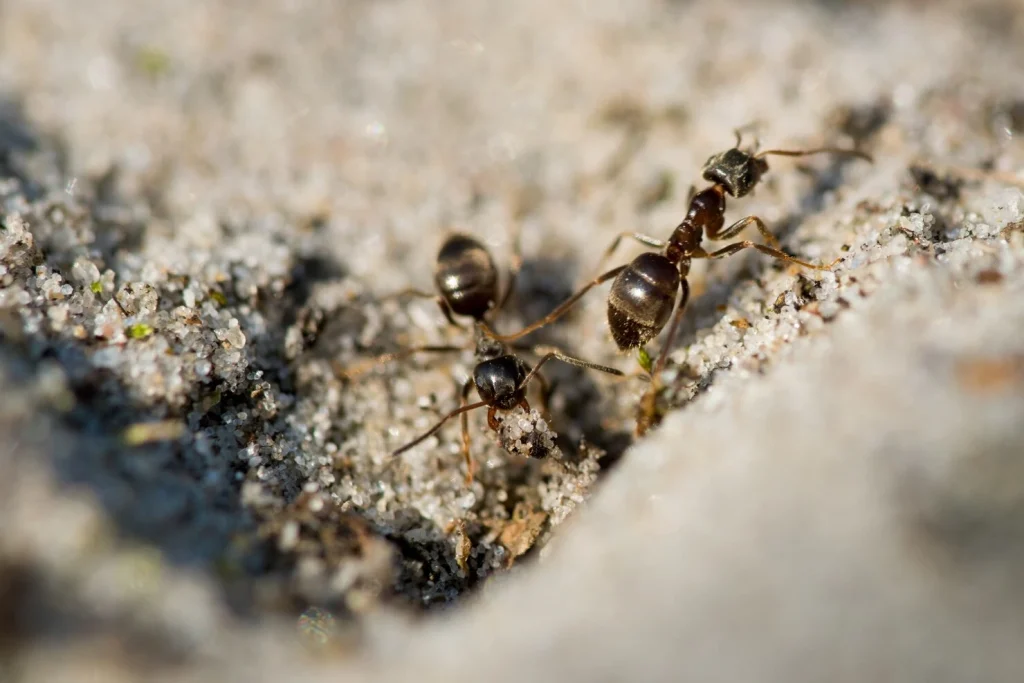
Tiny Openings Can Become Entry Routes
Ants don’t need an open front door.
Small cracks and gaps around foundations, windows, doors, pipes, wiring, baseboards, and other building components can provide potential entry routes.
The EPA recommends sealing cracks and crevices ants may use to enter structures as part of ant-management practices.
Inspecting the exterior can therefore be just as important as looking around the kitchen.
A professional central florida pest control strategy should consider how pests are interacting with the property rather than focusing exclusively on visible indoor activity.
Landscaping Can Influence Pest Activity
Plants growing directly against a structure can create sheltered areas and pathways around the exterior.
Mulch, leaf litter, fallen fruit, overgrown vegetation, and other organic material may also influence insect activity around the property.
This doesn’t mean homeowners need to remove all landscaping.
Instead, maintain vegetation thoughtfully and avoid allowing excessive plant growth or debris to accumulate immediately against the structure.
The objective is to reduce favorable conditions close to potential entry points.
Different Ants May Require Different Approaches
Not every ant species behaves the same way.
Some nest outdoors and enter buildings primarily to forage. Others may establish nesting sites in or around structures.
Food preferences and colony behavior can also vary.
That’s one reason identification matters.
The EPA’s integrated pest management guidance emphasizes monitoring and identifying pests accurately before choosing control methods. IPM isn’t a single treatment; it’s a decision-making approach that combines information about the pest, environment, and available management options.
A professional florida pest control company can inspect the property and determine an approach based on the pest and conditions actually present.
Why Spraying Every Ant You See May Not Solve It
Killing visible ants can create immediate satisfaction.
The trail disappears, so the problem seems solved.
But the colony may remain elsewhere.
Treatment strategies should consider the ant species, nesting location, food sources, entry points, and environmental conditions.
Randomly applying pesticides around a home without understanding the pest isn’t an ideal strategy.
Products should always be used according to their labels, and professional treatment may be appropriate when activity is persistent, extensive, difficult to identify, or recurring.
Integrated Pest Management Looks at the Cause
Integrated Pest Management, commonly called IPM, focuses on combining practical strategies rather than relying on a single control method.
The EPA describes IPM as an approach that uses information about pest life cycles and interactions with the environment to make appropriate pest-management decisions.
For ants, that may involve identification, sanitation, reducing food and water, addressing entry points, monitoring activity, and using appropriate control methods when needed.
This broader approach is useful because homes are environments, not sealed boxes.
Don’t Forget Pet Food
Pet bowls are easy to overlook.
Dry food may remain available for hours, while crumbs can collect around feeding areas. Water bowls also provide a consistent moisture source.
Clean around pet-feeding areas regularly and store unused food appropriately.
If ants repeatedly appear near the bowls, look for the direction they’re traveling rather than only moving the food to another corner.
The trail may help reveal an entry point that needs attention.
Ants in Bathrooms Can Tell a Different Story
When ants appear in a bathroom rather than a kitchen, homeowners sometimes wonder what they’re eating.
They may not be there primarily for food.
Bathrooms contain water, plumbing penetrations, cracks, wall voids, and other conditions that can influence pest activity.
Persistent ants around sinks, tubs, showers, or plumbing areas may justify closer inspection.
Pay attention to moisture problems as well as visible insects.
Commercial Properties Can Have Ant Problems Too
Restaurants, offices, warehouses, retail spaces, and other commercial properties can also experience ant activity.
Food storage, break rooms, garbage areas, landscaping, loading zones, and plumbing can all create conditions pests use.
Commercial pest management often requires consistent monitoring because even relatively minor activity can affect customers, employees, products, or business operations.
South Pest Control provides both residential and commercial services. Explore our Pest Control Services if your home or business needs help managing recurring ant or other pest activity.
Prevention Doesn’t Mean Your Home Will Never See an Ant
No prevention strategy can guarantee that a Florida property will never encounter an insect.
The realistic objective is to reduce favorable conditions, address vulnerabilities, monitor activity, and respond appropriately when pests become a problem.
That means cleaning up food sources, correcting unnecessary moisture, sealing practical entry points, maintaining exterior areas, and paying attention when activity changes.
A proactive approach can make pest problems easier to identify and manage.
When Should You Call a Pest Control Professional?
Consider professional service when ant activity continues despite cleaning and basic prevention, when trails repeatedly return, when you’re unsure what species you’re dealing with, when ants appear in several parts of the structure, or when the source can’t be located.
A professional inspection can look at both indoor and outdoor conditions.
If you’re searching for central florida pest control, focus on a provider that evaluates the property rather than treating every ant problem exactly the same.
To learn more about South Pest Control’s approach to Florida pest management, visit our About Us page.
Choose Pest Control Based on the Property
Every home has different landscaping, moisture conditions, construction details, food sources, and pest pressures.
That’s why effective pest management should be adapted to the property.
South Pest Control works with homeowners and businesses dealing with a variety of Florida pests. Visit our Service Areas page to learn more about available pest-control services and whether your community is currently served.
Working with a professional florida pest control company can help you move beyond repeatedly cleaning up visible insects and toward understanding why they’re appearing in the first place.
Stop Ant Trails From Becoming a Recurring Problem
Ants inside your home may be searching for food, water, or shelter, and the trail you see can be only one visible part of a larger colony.
Pay attention to where ants travel, reduce accessible food and moisture, clean spills and crumbs, inspect possible entry points, and avoid assuming every ant problem has the same solution.
Contact South Pest Control today if you need central florida pest control for ants or other unwanted pests around your home or business. Our florida pest control company can evaluate the property, identify pest activity, and recommend an appropriate treatment and prevention strategy—schedule your pest-control service today and take the next step toward a more comfortable property.